Dearest dancing monks, artists, and pilgrims,
Each week we are delighted to feature a reflection from our community in the Monk in the World guest post series. There are so many talented writers and artists at the Abbey and we love giving our dancing monks a chance to share their work. Submissions to the 2026-2027 publication calendar are open through June 25th. We’d love to consider your reflection, poetry, or artwork on the theme of contemplative practice and living as a monk in the world! Please click here to read through the details and submission guidelines.
Every year during June we offer a summer self-study sale. We have 29 self-study retreats in our virtual library which includes a variety of programs to support your contemplative and creative paths.
Here is an adapted excerpt from my book on Breath Prayer, the self-study companion retreat to the book is included in the sale:
Many religious traditions have some version of breath prayer. In the Christian tradition, the roots of breath prayer are built from St. Paul’s invitation to people who hold faith to “pray without ceasing.” In early Christianity many monks and nuns would endeavor to do exactly this in practice by bringing prayer to each breath. They would combine a phrase of prayer or blessing with the inhale and exhale so that every breath was a chance for them to be present to the sacred. In earliest tradition the prayer most often prayed was known as the Jesus Prayer or the Prayer of the Heart. This prayer and prayer form originated in the sixth century but the text is taken from words spoken to Jesus, as recorded in the gospels, in the first century.
This kind of “mantra” practice has also long been present in the Hindu tradition, where a sacred phrase is repeated as an anchor to keep one’s awareness focused on the divine at work in the world. In the Buddhist tradition these take the form of gathas, short verses recited with the breath as part of mindfulness practice and meditation and recited during ordinary activities, like walking, working, or cleaning and so on.
In Sufism it is the dhikr prayer that is repeated to help in remembering the sacred presence. Jews pray the Shema, “Hear O Israel: the Lord our God, the Lord is One” a prayer recited as part of morning and evening prayers and also before sleeping. Some consider it to be the most important prayer they offer. Some Christians pray with the rosary, which is a proscribed set of prayers to repeat again and again while using beads to mark your way. While some who pray the Shema or the rosary don’t always equate the prayer form with breath, for those who observe the way the prayer is embodied, repeated, they witness the breath and cadence so close in form that for many it is considered a close form to breath prayer.
In the Philokalia, the great collection of Eastern Christian wisdom books, which also teaches about the early practice of the Jesus Prayer, St. Hesychios the Priest writes: “let the name of Jesus adhere to your breath, and then you will know the blessings of stillness.” I love this image of letting the prayer adhere to your breath. Rather than a forcing together of word and breath, imagine the words naturally being drawn to the breath like a magnet to metal or like bees to flowers. In this bringing together, the “blessings of stillness” wash over you.
Our breath is such an intimate companion. One that sustains us moment by moment even as we are entirely unaware of that sustaining gift. Yet when we bring our intention to it, it also becomes an ally for slowing down, for touching stillness.
These prayers are meant to be gateways — both to bring you more present to the sacredness of whatever activity you are involved in, and also perhaps to eventually write your own short phrases for prayer to learn by heart.
The self-study retreat offers recordings of live webinar sessions with me, some beautiful art meditations from Dr. Amanda Dillon, and movement invitations with Dr. Jamie Marich.
Have a look at our entire library and see if there is a retreat that is calling to your heart right now. Use code SUMMER20 for a 20% discount! (And if the discounted amount is still too much for your budget, please contact us about a scholarship).
With great and growing love,
Christine
Christine Valters Paintner, OblSB, PhD, REACE
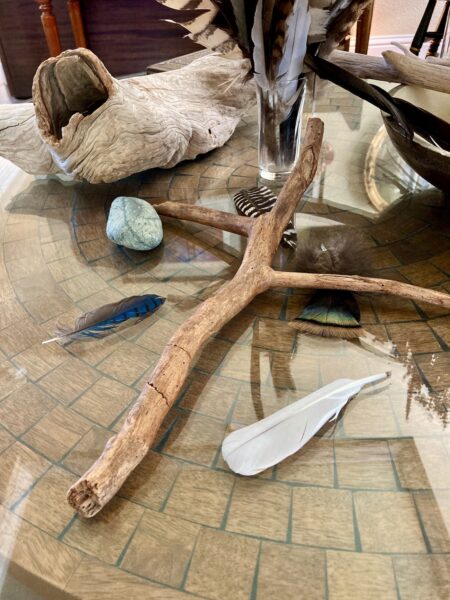
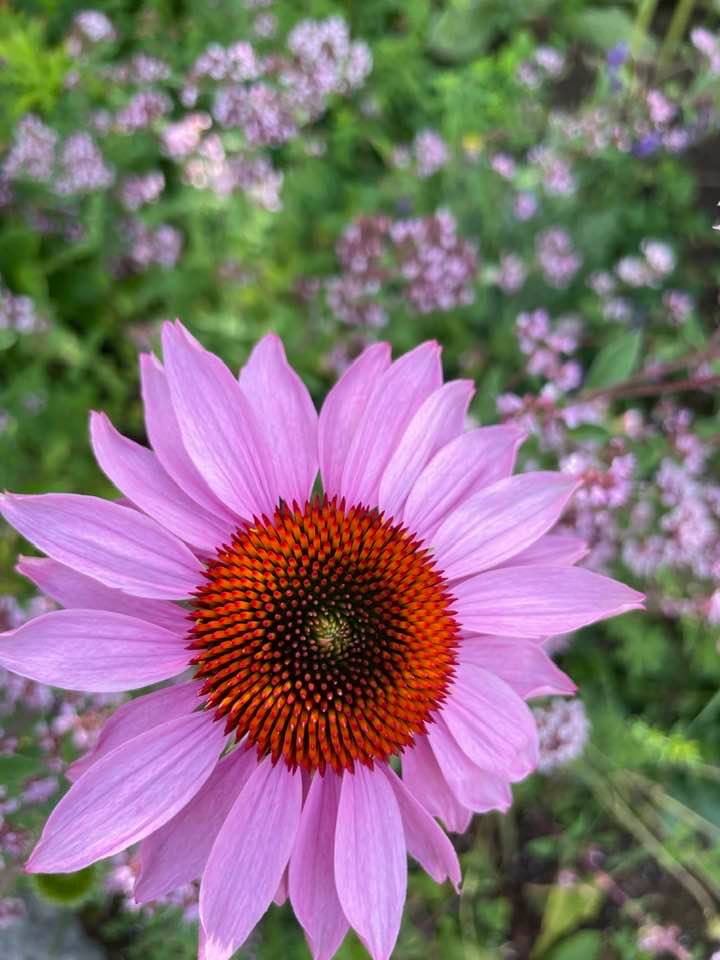
Image © Christine Valters Paintner | Brigit’s Garden, Co. Galway, Ireland